





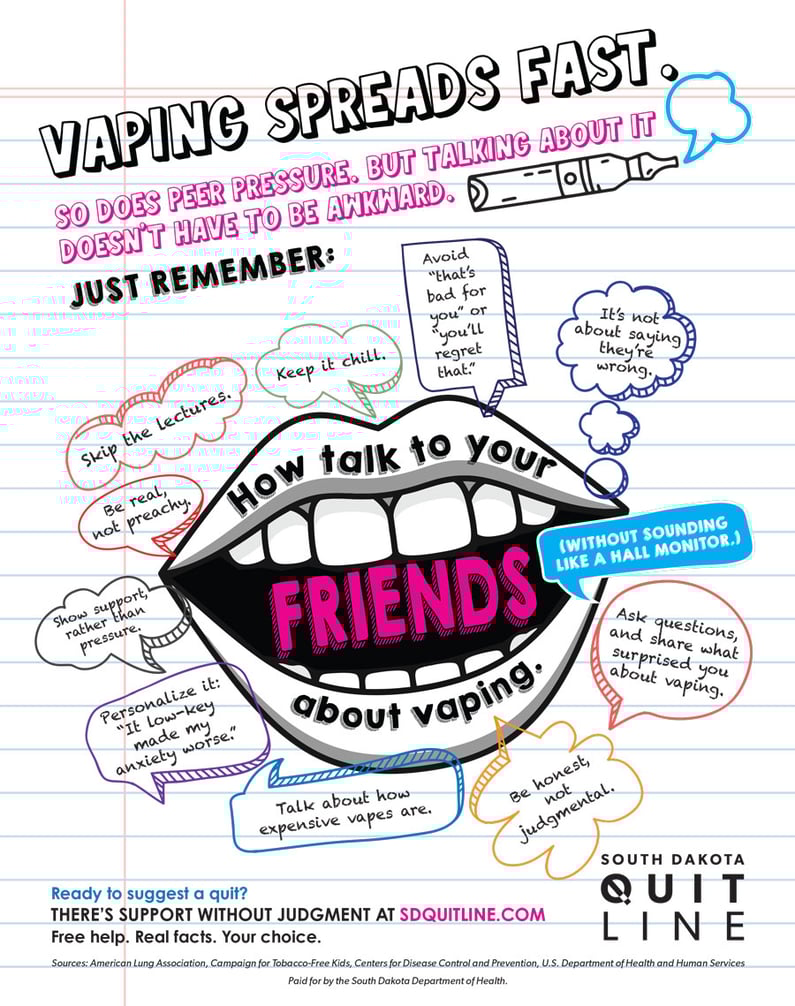
How to Talk to Your Friends About Vaping (Without Sounding Like a Hall Monitor)
Let’s be real for a second. Most people don’t start vaping because they wake up thinking, “Hm…today feels like a lung problem kinda day.” They start because, well… “everyone” is doing it, it “helps” with stress or it’s “not that bad.”
Or maybe someone handed them a vape in the school bathroom and told them to just give it a try.
In this scenario, if you’re the one who doesn’t vape, you might feel stuck watching it happen around you. You want to say something… but you also don’t want to sound annoying, uncool or like you’re trying to get someone in trouble.
Here’s the good news: You don’t have to. This is your awkward-free guide to talking about vaping in a way that’s honest, chill and actually lands.
Rule #1: You’re Not a PSA. You’re a Person.
You don’t need stats. You don’t need scare tactics. You definitely don’t need to lecture. Most people shut down the second a convo feels like a teacher speech, a health-class slideshow or even using the words, “you should.” The goal? Keep it human. Think about it this way: “I’m not here to convince. I’m here to share.”
That alone changes the whole vibe.
Rule #2: Say What Works, Not What Doesn’t.
When it comes to relating to a peer about quitting vaping, your word choice is so important. Avoid saying things like:
-
“You know that’s bad for you, right?” (too preachy)
-
“You’re going to regret that.” (too know-it-all)
-
“My cousin’s friend’s lungs collapsed.” (too dark)
And any sentence that starts with, “According to a study…” leads to an instant shutdown.
Try leading with curiosity, humor, being real about why you choose not to vape. Ask questions, keep it light and be authentic. Stay chill, low-pressure and don’t talk like you’re trying to “win.”
Rule #3: There’s a Right Way to Start the Conversation
You don’t need a big moment. Half the time, it’s just a throwaway comment. Consider these openers:
-
“Not gonna lie… I stopped because it was messing with my breathing.”
-
“I hate how expensive that stuff is.”
-
“It low-key makes my anxiety worse.”
-
“I just don’t like being hooked on something.”
They key? No accusations. No judgments. Just your experience. That’s hard to argue with, and way easier to hear.
Rule #4: Prepare for the Counter-Attack
If they respond with the classic, “It’s not that bad for you,” instead of arguing, meet them where they are. Personalize it to your own experiences, or those of people who are super close to you. Try:
-
“Yeah, that’s what I thought, too, until I noticed how fast I got addicted.”
-
“It’s wild how quick nicotine rewired my friend’s brain when she vaped.”
-
“My cousin didn’t think it mattered… then quitting was way harder than he expected.”
Never say they’re “wrong.” Just say what surprised you in your own personal or secondhand experiences. It just hits differently.
Rule #5: Be the Support System
If someone is indicating they want to quit, but just can’t seem to say it out loud, be prepared to show them some love. A lot of people hate vaping… but feel stuck. If you see a hint that maybe they’re not wanting to admit their desire to quit, try throwing out:
-
“If you ever want to stop, I’ve got you.”
-
“No pressure, but I can help if you want.”
-
“Quitting sucks, but it’s doable.”
Don’t push. Just open the door. It matters more than you think.
The Takeaway
Here’s the bottom line. Being real is always better than being right. Being supportive is always better than being scary. And being yourself is always better than being preachy. Vaping sucks. But so does feeling powerless. And you’ve got more influence than you think you do.
Want more info on what makes vaping one of the grossest choices you can make? Check out VapingSucks.tv for the skinny on what makes this habit the ultimate yuck.
Sources: American Lung Association, Campaign for Tobacco-Free Kids, Centers for Disease Control and Prevention, U.S. Department of Health and Human Services