





Nicotine Replacement Therapy
Nicotine replacement therapy (NRT) is a safe, effective way to help curb cravings and ease symptoms.
- Nicotine Gum
- Nicotine Lozenges
- Nicotine Patches
Nicotine Gum
How to Use Nicotine Gum
If you choose to use nicotine gum, start on your quit day. Chew slowly until your mouth begins to tingle. Then rest between your cheeks and gums. While in your mouth, the gum releases nicotine, which you quickly absorb. Repeat as necessary, roughly one piece every hour or two. Do not exceed 24 pieces in 24 hours. Use for six to 12 weeks.
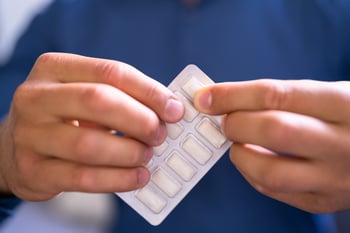
How to get nicotine gum
Purchase over the counter, or visit the South Dakota QuitLine to see if you’re eligible to receive NRT gum at no cost. Nicotine gum comes in 2 mg or 4 mg doses.
Nicotine Gum Side effects
- Hiccups
- Mild oral pain and irritation
- Mouth sores
If the nicotine gum causes nausea, vomiting, dizziness, rapid heartbeat or severe oral pain, stop use immediately and contact your health care provider.
Nicotine Lozenges
How to Use Nicotine Lozenges
If you choose to use nicotine lozenges, start on your quit day. Place a lozenge into your mouth and move it between your cheeks and gums, letting nicotine absorb. Do not bite or chew the lozenge as you would hard candy — let it dissolve completely in your mouth. Avoid eating and drinking 15 minutes before and during use. Repeat as necessary, often one piece every hour or two initially. Do not exceed 20 lozenges in 24 hours. Use for as many as 12 weeks.
How to get nicotine lozenges
Purchase over the counter, or visit the South Dakota QuitLine to see if you’re eligible to receive NRT lozenges at no cost. Nicotine lozenges comes in 2 mg or 4 mg doses.
Nicotine Lozenges Side effects
- Dry mouth
- Hiccups
- Mouth sores
- Coughing
- Heartburn
- Headache
- Nausea
If the nicotine lozenges cause severe symptoms, stop use immediately and contact your health care provider.
Nicotine Patches
How to Use Nicotine Patches
If you choose to use nicotine patches, start on your quit day. Apply the patch to a clean and dry area of skin located below the neck and above the waist, preferably where hair is minimal or absent. Nicotine will absorb consistently throughout the day. Replace the patch with a new one every morning, choosing a different spot each time. Gradually reduce patch strength over time, tapering off the usage over a few months.
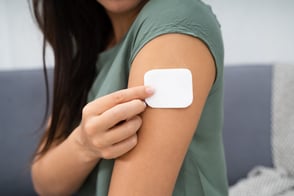
How to get nicotine patches
Purchase over the counter, or visit the South Dakota QuitLine to see if you’re eligible to receive NRT patches at no cost. Nicotine patches comes in a variety of types and doses.
Nicotine patches Side effects
- Skin irritation
- Redness
- Rash
- Trouble sleeping
If the nicotine patches cause nausea, vomiting, dizziness, rapid heartbeat or a rash that lasts longer than 4 days, stop use immediately and contact your health care provider.
FREE NICOTINE PATCHES, GUM & LOZENGES
Nicotine replacement therapy (NRT) can help you quit nicotine pouches, dip, chew, smoking, vaping and more. Here's how to get free nicotine patches, gum or lozenges through the SD QuitLine.
If you need more assistance, you can learn about free prescription quit medications with phone coaching.

Get weekly calls with a Quit Coach for up to eight weeks, plus up to eight weeks of free patches, gum or lozenges. Free prescription medication is also available.

Prefer texting? You'll get about eight weeks of texting with a coach, a few phone calls and up to eight weeks of free patches, gum or lozenges.
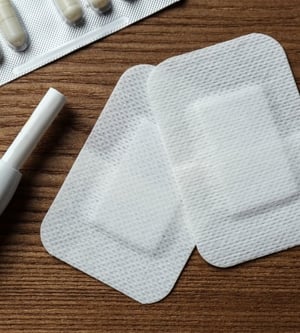
Want to quit on your own terms? Order a Kickstart Kit for up to four weeks of free patches, gum or lozenges delivered right to your door.

Quit & Stay Quit
Everybody quits differently. Your quit journey is your own, and only you know what works for you. Find the method that fits into your journey to put out that cigarette, shut off the vape pen or close the tin for the last time. Start your quit journey today, and get back to your life!
Read More
Phone Coaching
Get help from a Quitline phone coach. Your coach will be there for you every step of the way.
Get Started
Kickstart Kit
Kick the habit with the FREE Kickstart Kit, which ships to your door with cessation medication and the Quit Guide.
Get Your Kit
Quit Guide
Skip the coaching and medication for now. Start your journey with the FREE Quit Guide to quit when you are ready.
Get the Guide